TIPS
Why Our Basmati Rice Never Comes From a Rice Cooker
The 7 Monks Kitchen · October 2026
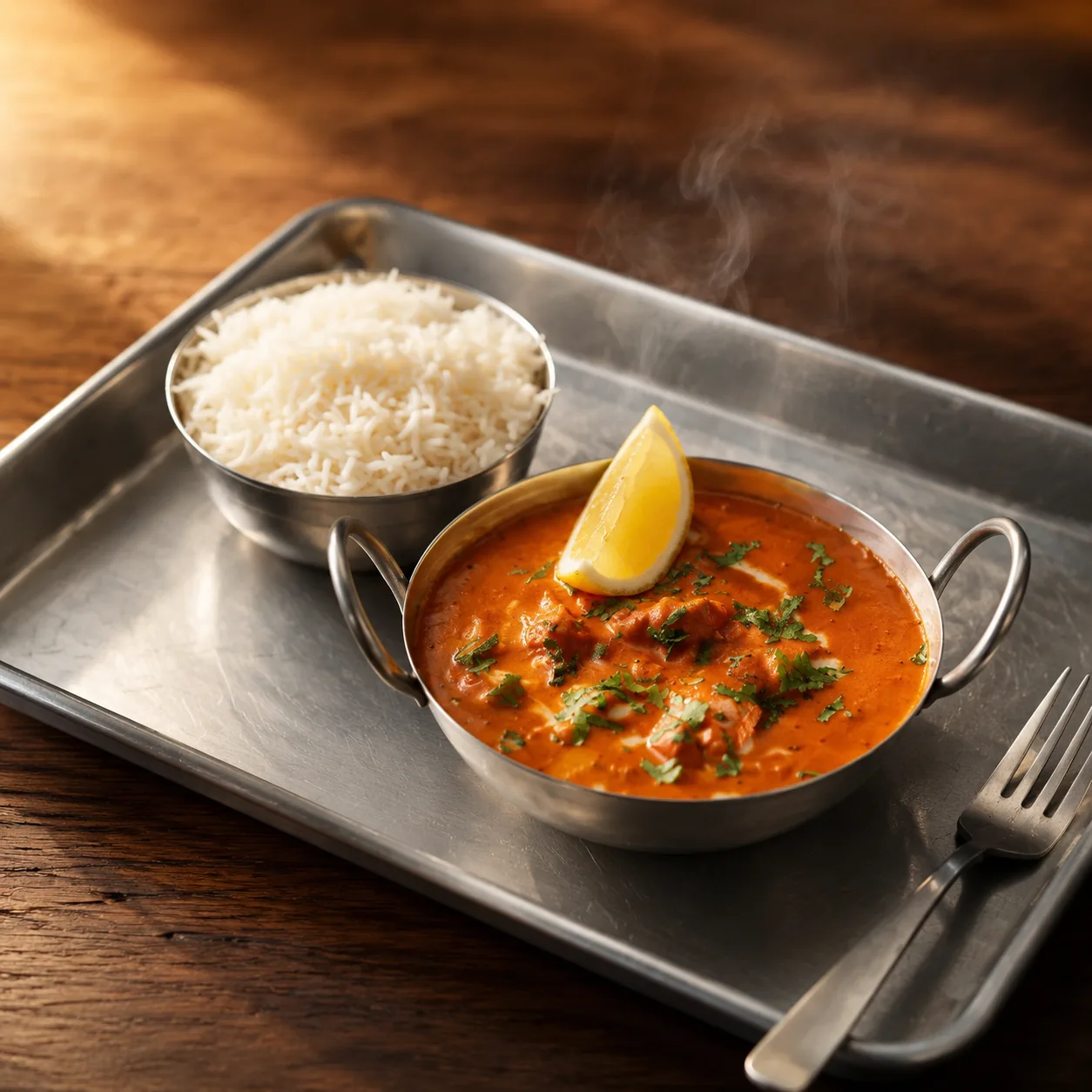
I have a confession that probably won’t surprise anyone who grew up in an Indian household:
I am very particular about rice.
Not fancy rice.
Not complicated rice.
Just really good, fluffy basmati rice where every grain is separate.
And in our kitchen, that means one thing:
No rice cooker.
Before anyone comes for me, I have nothing against rice cookers.
If you love yours, please keep using it.
This is just how my family has always made basmati rice, and once you grow up eating it this way, you notice the difference.
It Starts With Washing the Rice
Basmati rice needs a little attention before it ever touches the stove.
We wash the rice first.
And not just one quick rinse.
The water starts out cloudy because there’s starch sitting on the outside of the grains. As you rinse it, the water gradually becomes clearer.
Removing some of that extra starch helps keep the finished rice from becoming too sticky.
It’s a tiny step, but it makes a big difference.
My mom would absolutely notice if I skipped it.
Indian moms have a sixth sense for these things.
Then We Boil It in Plenty of Water
This is the part that surprises some people.
Instead of measuring a small amount of water and letting the rice absorb all of it, we cook our basmati in plenty of boiling water.
Think of it a little like cooking pasta.
The rice has room to move around while it cooks instead of sitting tightly packed together absorbing every drop of water.
Once the grains are cooked properly, we drain the extra water.
Simple.
Why Drain the Rice?
This is the part of the process I grew up with.
Boil it.
Check it.
Drain it.
The goal is rice that is light and fluffy, with long grains that stay separate from each other.
You don’t want mush.
You don’t want a giant sticky scoop.
You want to be able to see those beautiful individual grains of basmati.
For me, that texture matters just as much as the flavor.
Basmati Isn't Just “White Rice”
I think this is something people sometimes miss when they first start eating Indian food.
The rice isn't just there to take up space on the plate.
Basmati has its own aroma, texture and flavor.
The grains are long and slender, and when they’re cooked properly, they stay light and fluffy.
There’s also something about that smell when you lift the lid off freshly cooked basmati.
If you grew up around it, you know exactly what I mean.
It smells like dinner is almost ready.
Why Does the Texture Matter So Much?
Because of what you're eating it with.
Curries are full of sauce.
You want rice that can soak up some of that sauce while still keeping its texture.
Take a spoonful of fluffy basmati, add a little curry, and you get both in the same bite without everything turning into one big mushy mixture.
Then add a piece of naan.
Now we're talking.
Is This the Only Way to Cook Basmati Rice?
Absolutely not.
This is important.
Indian families have different techniques. People soak their rice for different lengths of time. Some use absorption methods. Some use pressure cookers. Some absolutely use rice cookers.
And every family will probably tell you their way is the correct way.
That might actually be the most Indian part of this entire conversation.
This is simply the method I grew up with and the one that feels right to me.
Wash.
Boil.
Drain.
Fluff.
Nothing complicated.
The Rice Cooker Debate
People are sometimes surprised when I tell them we don't use a rice cooker for our basmati.
And I understand why.
A rice cooker is convenient.
You measure everything, press a button and move on with your life.
There are definitely days when that sounds wonderful.
But for the kind of basmati rice I grew up eating, I like having control over it.
I can check the grain.
I can feel when it's ready.
I can drain it at exactly the point I want.
Maybe that's unnecessary.
Maybe it's just years of watching my mom do it.
Probably a little bit of both.
Sometimes the Simplest Food Has the Most Rules
That might be my favorite thing about rice.
It looks like the simplest thing on the plate.
Rice. Water. Done.
Except every family has opinions about how much to wash it, how long to cook it, whether to soak it, how to drain it and how long to let it rest.
Ask five Indian families how to make perfect basmati rice and you may get six answers.
But this is ours.
Wash it until the water gets clearer.
Cook it in plenty of water.
Drain it when the grains are ready.
Let it stay light and fluffy.
And whatever you do…
Don't let Mom catch you skipping the rinse.
MORE FROM THE KITCHEN
GUIDE
What to Order at an Indian Restaurant If You’ve Never Had Indian Food Before
If you’ve never had Indian food before, I know the menu can be a little intimidating.
TIPS
Reheating 7 Monks Like You Mean It
Eight dishes, eight little tricks. The microwave shortcuts, the skillet revival, the napkin trick for naan — straight from the kitchen.
